

Batteries Emerging as Multifunctional Assets in India’s Power System
Batteries help with energy arbitrage and provide continuous power
April 28, 2026

Follow Mercom India on WhatsApp for exclusive updates on clean energy news and insights
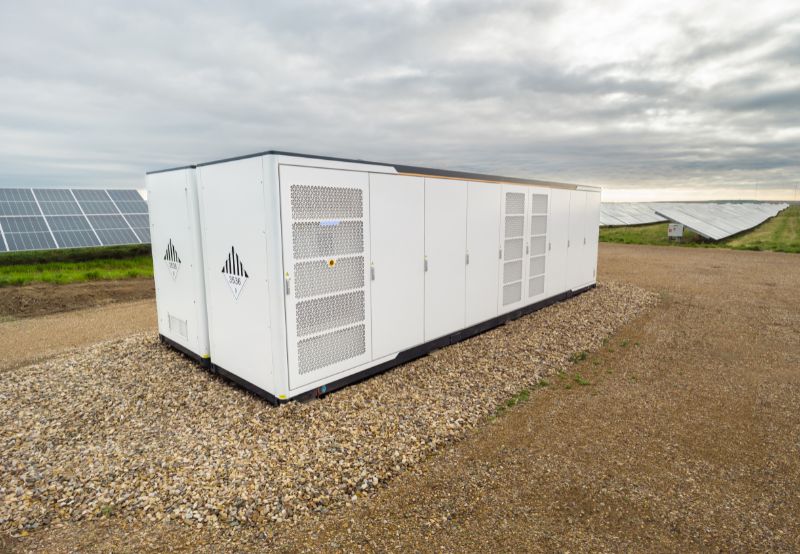
Evolving tariff structures and advances in battery technology are bringing energy storage to the center stage. Industry experts note that batteries are no longer limited to storing energy but are emerging as multifunctional assets that support diverse operational needs. Batteries today also offer improved safety features and are integrated with power conversion and energy management systems, increasing their efficiency.
Experts also highlight the essential role of inverters for efficient energy system performance.
Role of Inverters
On why inverters are critical for solar project operations, Rakshanda Lande, Head, Sales and Marketing (West and Central India), at Ningbo Deye New Energy, said inverters are the brain of the system. Inverters monitor solar systems, detecting faults and current surges. Their primary function is to convert DC power to AC power for household and industrial use.
While selecting inverters, Lande said, customers must check their efficiency, which should be at least 90%. They must also be aware of inverter brands, including the after-sales services they provide. She advises customers to check for remote monitoring systems for the inverters. “The remote monitoring systems for inverters should have their own app portal, so you can access it remotely on mobile. Wherever you are, you can monitor solar generation for households or commercial units.”
Lande said string inverters are commonly used to convert power and help reduce electricity bills, particularly in residential systems. Hybrid inverters can connect to multiple power sources. These include solar panels, batteries, the grid, and diesel generators. Microinverters are suitable for urban areas with shading issues. Such inverters also help improve solar system efficiency by reducing the required cable length.
Regarding the type of inverter for consumers to use, she recommended hybrid inverters as the best option. These inverters can be connected to solar systems, diesel generators, and battery systems. They are also future-ready; consumers with solar systems can connect them to the grid or later to battery storage systems.
Inverters are also connected to mobile apps and can be configured to discharge energy flexibly.
Battery Storage Benefits
Gautam Patil, Vice President at Cygni Energy, spoke about the challenges that battery storage solutions address for C&I consumers in rooftop solar or open access projects. He said batteries provide buffering to ensure synchronization between energy generation and load.
This March, the Maharashtra Electricity Regulatory Commission amended its multi-year tariff order, revising time-of-day (ToD) banking rules and rationalizing the rebate structure to better align with regulatory principles and solar consumption patterns.
Referring to the new ToD rules, Patil highlighted some benefits of storage for generated but unused solar power in batteries. Energy storage enables consumers to store low-cost power and use it during high-tariff periods, improving savings. It also helps utilize excess solar generation that would otherwise be curtailed due to policy or system limits, while offering flexibility to shift energy use and reduce dependence on grid electricity.
Patil added that since consumption patterns vary, only 25% to 30% of solar power can usually be consumed directly. The remaining power will need to be stored for later use. Many businesses install solar capacities that are three to four times their load. They also combine solar generation with a storage system with a capacity of up to 1.5 times the solar output to manage excess energy and ensure a reliable supply.
Additionally, batteries help address inconsistent solar generation, such as during cloud cover. This can significantly reduce or eliminate penalties under the deviation settlement mechanism.
Patil also highlighted that the average lifespan of a battery system has increased to approximately 20 years, bringing it closer to the 25-year lifespan of solar projects. Therefore, the need to replace batteries in solar projects has reduced considerably.
Solar Plus Storage Systems
Patil highlighted the benefits of installing battery systems in solar projects beyond energy arbitrage. A critical role of battery systems is enabling the consumption of stored energy during brief demand spikes. This helps in avoiding higher contract demand charges. Battery systems can also replace diesel generators or reduce their use during power outages and peak demand.
Regarding which battery systems are best for connecting existing solar projects to storage, he said AC-coupled battery systems are easier to install, especially for existing solar setups, as they can be directly connected to standard electrical panels. They are modular and enable users to start with a smaller capacity and expand it over time.
However, Patil shed light on s some challenges with AC-coupled batteries. Such systems cannot easily distinguish between power sources or loads, requiring more advanced control systems to ensure efficient operation.
On whether adding battery storage to rooftop solar is worth the extra cost, Lande said consumers are increasingly focusing on more than just savings when opting for battery storage systems. They are also using storage for power security. However, consumers can expect to see returns in two to three years, even though the initial costs for batteries and their components, including the management system, are higher.
Battery Storage as Power Backup
Power backup systems are increasingly incorporating battery systems instead of UPS and diesel generators. Battery storage is particularly useful where diesel generator use is limited to 30 to 40 hours per month. Incorporating battery systems in such cases helps reduce diesel costs and avoid challenges posed by fuel shortages, theft, safety risks, and harmful emissions.
Patil stated that using battery storage during power outages is most beneficial when grid electricity is expensive, such as during peak hours.
However, if outages occur during low-tariff periods, the benefit depends on the prevailing electricity rates. Hybrid systems are particularly useful as they can provide backup during outages, unlike standard grid-connected systems. In states such as Maharashtra, using batteries for short outages of roughly 2 hours was found to be economically viable.
Lande added that solar and battery storage can supply power during outages by switching to stored energy in milliseconds, helping ensure that operations are not disrupted.
Outlook
Discussing whether solar plus storage will become the standard project design in the future, Patil said that combining solar power with battery systems is considered an effective option for achieving a low levelized cost of energy. Additionally, solar and battery technology have become significantly more affordable recently. Costs are expected to continue declining, even after technologies evolve.
This trend suggests that solar plus storage systems will likely remain among the most cost-efficient solutions for consumers in the long term.
Lande said the Indian market is prepared for large-scale adoption of battery storage. Policies supporting the ToD tariffs and the push to include battery storage in programs such as PM Surya Ghar will help consumers better utilize stored energy.
On the future scaling of battery solutions, Patil said battery systems are no longer limited to a single function, such as energy shifting. While power conversion, energy management systems, and inverters manage and control operations, the battery supplies power, enabling the energy system to operate effectively across a range of use cases. He added that industries have generally been cautious about using on-site battery systems due to safety concerns. However, new technologies such as lithium iron phosphate batteries have largely addressed these issues.
These insights were shared at Mercom India’s C&I Clean Energy Meet held in Navi Mumbai recently. Mercom hosts a series of C&I Clean Energy Meets across India to help energy buyers evaluate renewable energy sourcing options to reduce electricity costs and operational emissions. The next event in the series will be held in Jodhpur on May 15, 2026.


Parth Shukla
More articles from Parth Shukla.