

Daily News Wrap: India Must Double Wind Capacity Additions to Hit 2030 Target
Waste management firm eyes big savings on power bills with rooftop solar
June 23, 2026

Follow Mercom India on WhatsApp for exclusive updates on clean energy news and insights
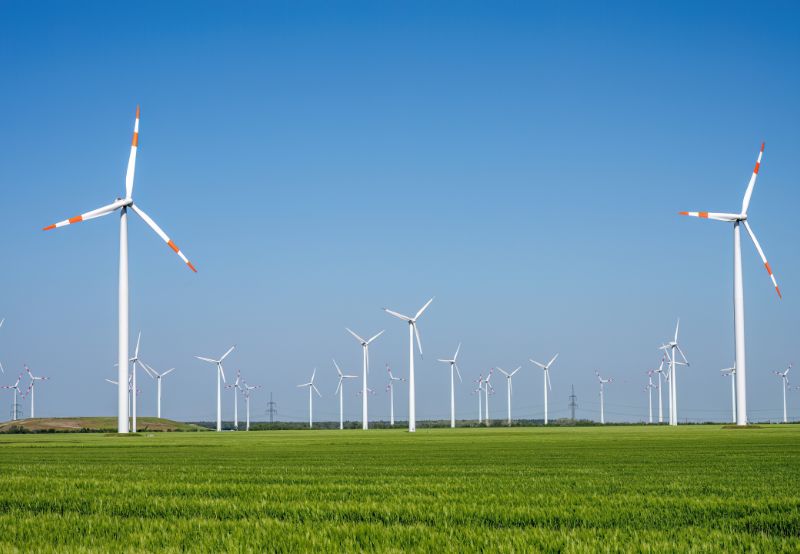
India may struggle to meet its 100 GW wind energy target for 2030, with current installed capacity and a modest pipeline falling short of the required pace. According to Mercom India Renewable Energy Project Tracker, the country has a total operational wind energy capacity of over 50 GW.
Kerala-based Green Worms Waste Management stepped up its sustainability commitment by installing a 202.96kW rooftop solar system at its facility. The rooftop system is expected to save the company approximately ₹600,000 (~$6,357) annually in electricity expenses.
A leading solar module manufacturer in Andhra Pradesh is expected to save ₹2.21 billion (~$23.28 million) over 20 years through a 9.75 MW rooftop solar power purchase agreement (PPA). The project was structured by Two Point O Capital as a five-year rooftop solar PPA for a 9,750 kWp system.
At the sixth edition of Mercom India’s Renewables Summit to be held on July 1 and 2, 2026, at the Hyatt Regency in New Delhi, industry stakeholders will get together to discuss how hybrid projects can pave the way for better grid stability at the session titled “Powering Stability: Scaling Hybrid Renewables for a Resilient Grid”. The session will be held on July 1, 2026, at 01:15 PM in the Oval Hall on the Lower Ground Floor.
In an interview with Mercom India, Deepak Ushadevi, Managing Director and CEO at Ciel & Terre India, discusses the factors driving floating solar adoption, the engineering challenges associated with large-scale projects, climate resilience considerations, and how innovations are shaping the next phase of market growth.
The Gujarat Electricity Regulatory Commission (GERC) issued draft amendments to the GERC (Terms and Conditions for Green Energy Open Access) (Sixth Amendment) Regulations, 2026, proposing changes in rules for banking charges and their calculation for renewable energy open access consumers. Stakeholders must submit their comments and suggestions by July 20, 2026.
The Central Electricity Regulatory Commission adopted a tariff of ₹6.74 (~$0.078)/kWh for 1,500 MW of assured peak power capacity to be procured by SJVN from interstate transmission system-connected renewable energy projects coupled with energy storage systems. The Commission also allowed SJVN to charge a trading margin of ₹0.07 (~$0.0007)/kWh for the sale of power to distribution companies and other buying entities.
NTPC Renewable Energy invited bids from lenders and financial institutions for a rupee term loan of up to ₹60 billion (~$636 million) to support its renewable energy expansion. The last date to submit bids is June 25, 2026. Bids will be opened on the same day.
The Power and Electricity Department, Mizoram, invited bids for the engineering, procurement, and construction of a 1.5 MW grid-connected solar power project with 900 kW of battery storage at Zoram Medical College and Hospital in Falkawn. The last date to submit bids is July 23, 2026. Bids will be opened on the same day.
The Rajasthan Solar Park Development Company, a subsidiary of Rajasthan Renewable Energy Corporation, invited bids to set up a battery energy storage system at the 680 MW Bhadla Solar Park in Rajasthan to use underutilized transmission capacity during non-solar hours. Bids must be submitted by July 14, 2026.
The Fertilizers and Chemicals Travancore invited bids to set up a 6 MW grid-connected floating solar project at Ambalamedu Lake in the Ernakulam district, Kerala. The project will be developed under a build-own-operate-and-transfer model. The last date to submit bids is July 13, 2026. Bids will be opened on the same day.
Origis Energy, a U.S.-based renewable energy project developer, closed a $900 million corporate credit facility comprising $650 million in funded credit facilities and a $250 million letter of credit facility. First Citizens Bank, ING Capital, Natixis, and Santander served as joint bookrunners and coordinating lead arrangers for the transaction.
Permanent Power Company, an energy holding platform operating and developing solar and storage projects, secured approximately $600 million in construction financing for its Grape solar and battery energy storage project in California. Permanent Power Company is backed by CIM, a real estate and infrastructure owner, operator, lender, and developer.
Türkiye secured €400 million ($468.4 million) in World Bank-backed financing to accelerate investments in wind, solar, and battery storage. The funding is expected to help deliver 1,579 MW of renewable energy capacity, support 392 MWh of battery storage, and mobilize up to $405 million in private capital.