

Daily News Wrap-Up: FDRE Projects Tap New Revenue from Surplus Power Sales
MNRE exempts ALMM-II mandate for PM Surya Ghar consumers, giving up subsidy
June 10, 2026

Follow Mercom India on WhatsApp for exclusive updates on clean energy news and insights
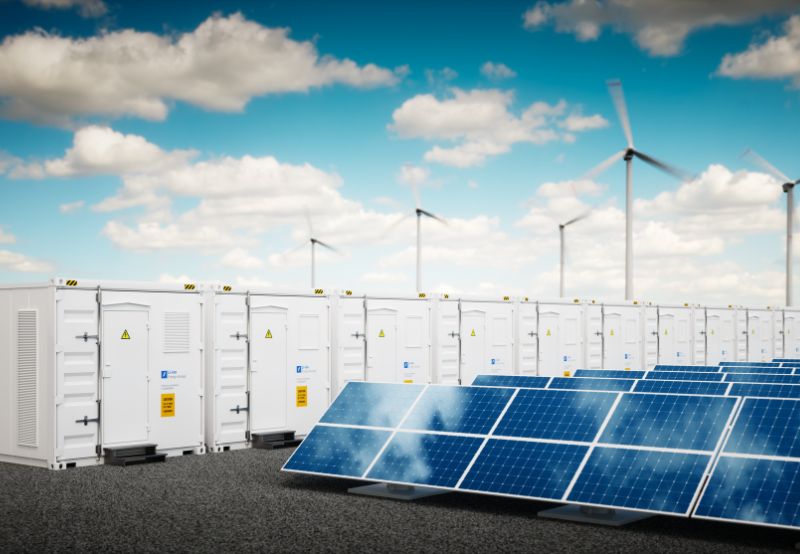
Firm and Dispatchable Renewable Energy (FDRE) projects are creating new revenue opportunities for developers by enabling the sale of excess renewable generation. These projects typically combine oversized solar, wind, and battery storage capacities to meet dispatch obligations while ensuring a reliable and continuous supply of renewable power.
The Ministry of New and Renewable Energy (MNRE) clarified that residential rooftop solar consumers availing net metering under the PM Surya Ghar: Muft Bijli Yojana who choose the ‘Give It Up’ option are exempt from the applicability of the Approved List of Models and Manufacturers (ALMM) List-II for solar cells only until March 31, 2027.
MNRE waived the requirement for physical factory inspections for certain higher-wattage solar modules under the ALMM. The waiver will apply to models with wattage up to 3% higher than the highest-wattage solar module enlisted in the ALMM.
The Central Electricity Regulatory Commission directed the Central Transmission Utility of India to process the application of a renewable energy project developer to withdraw connectivity for its proposed 250 MW wind-solar hybrid power project in Bidar, Karnataka.
The Uttar Pradesh Electricity Regulatory Commission (UPERC) approved a power purchase agreement entered into by a developer with Uttar Pradesh Power Corporation for a 5 MW concentrated solar power pilot project in Unnao with a tariff of ₹4.73 (~$0.05)/kWh.
UPERC approved 42 power purchase agreements for 110.5 MW grid-connected solar projects under the feeder-level solarization program of PM-KUSUM Component C-2.
The economics of commercial and industrial solar projects are being shaped by energy banking regulations that eliminate consumers’ flexibility to use banked energy across broader time blocks. In an interview with Mercom India, Dipankar Pal, Founder and Managing Director at Roofsol Energy, discussed how the revised banking framework, storage requirements, grid-related charges, and policy uncertainty are influencing C&I solar adoption.
India’s Ministry of Defense approved a 250 MW solar power project with a battery energy storage system at Sitapur, Uttar Pradesh, on approximately 850 acres of vacant land. Defense Minister Rajnath Singh approved the project, which will be developed at the Sitapur ex-cantonment site.
The Institute of Mental Health and Hospital in Uttar Pradesh’s Agra district installed a 321.6 kW rooftop solar system capable of generating 469,536 units of electricity annually. The move will help the institution offset a significant portion of its grid power consumption and support its sustainability goals.
India’s textile industry has always been energy-intensive. But with rising power costs and growing pressure to reduce carbon emissions, textile manufacturers are increasingly turning to solar power as a practical business solution. A recent rooftop solar installation at Dhanish Cotton Mills in Punjai Puliampatti, Erode, Tamil Nadu, shows how clean energy is becoming an important part of industrial competitiveness.
Power Grid Corporation of India invited bids to set up a 400 kV gas-insulated switchgear substation in Tuticorin, Tamil Nadu, for the transmission system associated with proposed green hydrogen and green ammonia projects in the region. Bids must be submitted by June 22, 2026.
Adani Energy Solutions signed a binding securities purchase and subscription agreement to acquire 100% of the equity in smart metering company IntelliSmart Infrastructure. IntelliSmart is a joint venture between the National Investment and Infrastructure Fund and Energy Efficiency Services with a portfolio of more than 22 million meters deployed across Uttar Pradesh, Gujarat, Madhya Pradesh, Bihar, and Assam.
Researchers at the Indian Institute of Technology Guwahati (IIT Guwahati) have developed a formamidinium -based perovskite semiconductor technology for solar cells and memory devices, using a molecular interface engineering method that helped solar cells achieve 25.73% efficiency, converting one-quarter of incident sunlight into electricity.
Gurgaon-based independent power producer ACME Solar Holdings completed a ₹28 billion (~$293.47 million) qualified institutional placement, its first equity capital raise since listing in 2024.
Researchers have commissioned an advanced prismatic battery cell production line at the U.S. Department of Energy’s Pacific Northwest National Laboratory. The production line consists of 16 pieces of equipment across a 1,400 sq. ft laboratory space.