

Daily News Wrap-Up: India’s Solar Manufacturing Faces a Growing Skills Gap
Odisha issues draft ancillary services framework
May 25, 2026

Follow Mercom India on WhatsApp for exclusive updates on clean energy news and insights
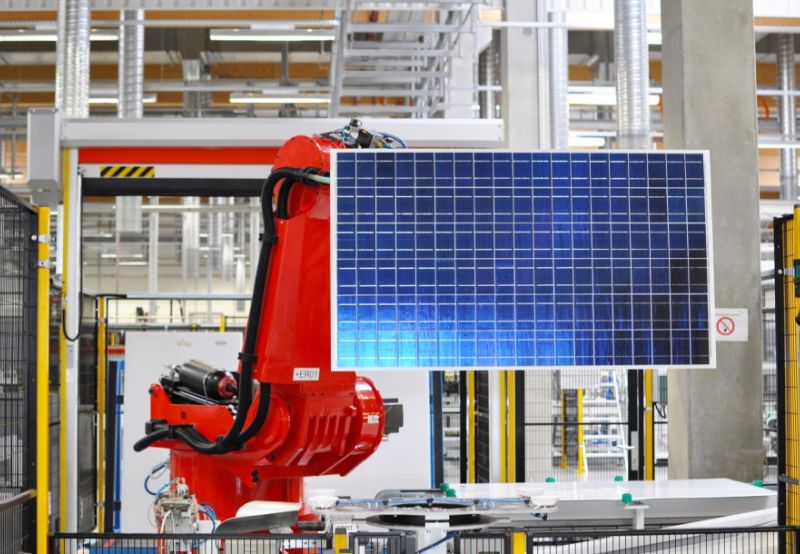
India’s push to expand solar manufacturing is exposing a persistent gap between academic training and industry requirements, contributing to a growing shortage of skilled workforce, according to industry leaders. The widening skills gap has increasingly affected project costs, execution timelines, and overall productivity across the sector.
The Odisha Electricity Regulatory Commission issued the draft Ancillary Services Regulations, 2026, which sets out a state-level framework for the procurement, deployment, payment, accounting, and settlement of ancillary services. The draft defines ancillary services as services necessary to support grid operation by maintaining power quality, reliability, and security.
India’s clean energy transition initiatives are increasingly moving beyond utility-scale projects and into the country’s medium, small, and micro enterprises (MSME) segment, with businesses exploring strategies to lower their power costs and become more sustainable in their operations. According to banking executives, renewable energy financing has evolved significantly over the last few years, moving beyond conventional project lending into customized financial products designed specifically for MSMEs, commercial establishments, and industrial consumers seeking to reduce electricity costs and improve long-term operational efficiency.
NLC India invited bids to lease 1,500 acres of land in Gujarat for the development of solar projects. Bidders must arrange government or private land parcels through a lease arrangement on behalf of NLC India Renewables. The tender has specified the land requirement based on a benchmark of five acres per MW for solar project development.
For energy-intensive industries, the shift to solar is no longer being driven by sustainability targets alone. From food processing units to manufacturing plants, businesses are increasingly adopting captive rooftop solar systems as a practical way to protect margins, stabilize energy costs, and reduce dependence on conventional grid power. The growing adoption reflects a broader shift in how industries no longer view energy as merely a utility cost but as a strategic business lever.
I Squared Capital, a global infrastructure investment manager, launched Cube Grid, a power transmission platform targeting India’s electricity grid, with plans to deploy up to $1 billion in equity capital. The platform will acquire and build a portfolio of transmission assets across India. Cube Grid has signed agreements for seed assets totaling more than 1,450 circuit kilometers of transmission lines.
Rooftop solar solutions company Fujiyama Power Systems’ board of directors approved a proposal to set up a 1.2 GW TOPCon solar cell manufacturing facility at its Ratlam plant in Madhya Pradesh for an estimated investment of ₹3.5 billion (~$36.48 million). The investment will be funded through a combination of debt and internal accruals.
Veda Solar commenced commercial production of solar modules at its Surat, Gujarat, manufacturing facility, with capacities ranging from 550 MWp to 630 MWp. The company aims to enhance its commercial and utility-scale portfolio. Veda Solar said it combines 1.5 GW production capacity with TOPCon and bifacial technology. Its portfolio also includes monofacial, bifacial, black, and poly modules. Its manufacturing process incorporates advanced N-Type TOPCon technology.


Mercom Staff
More articles from Mercom Staff.