

Daily News Wrap-Up: Land Issues Slow India’s Solar Open Access Expansion
CTUIL proposes stricter grid connectivity, reallocation rules
April 14, 2026

Follow Mercom India on WhatsApp for exclusive updates on clean energy news and insights
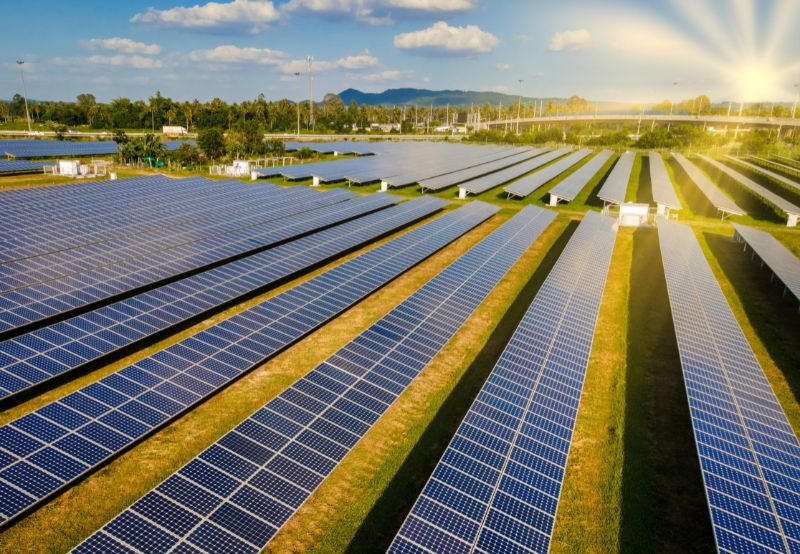
Consumers are increasingly shifting to solar open access due to rising electricity costs, corporate decarbonization goals, and the need for predictable long-term energy pricing. India added 7.8 GW of open access solar capacity in 2025, a marginal increase from 7.7 GW the previous year. Challenges arising from land acquisition were among the reasons why the growth was largely flat.
The Central Transmission Utility of India issued a revised detailed procedure for the grant of connectivity and general network access, expanding the operational framework for accessing the interstate transmission system, introducing stricter compliance requirements, while adding new mechanisms to improve transmission capacity utilization.
The Ministry of New and Renewable Energy clarified that a no-objection certificate would not be required for the sale of power from an energy storage system when it is charged using non-renewable sources and sold through merchant or third-party arrangements, provided that the corresponding renewable energy component has not yet been commissioned.
The Odisha Electricity Regulatory Commission proposed a phased increase in renewable consumption obligation targets, mandating obligated entities to raise renewable energy consumption from 29.91% in 2024–25 to 43.33% by 2029–30. The draft “OERC (Renewable Consumption Obligation, Distributed Renewable Energy Sources and Renewable Energy Linked Concepts) Regulations, 2026, specifies a detailed composition of the renewable consumption obligation.
Commercial and industrial consumers in Madhya Pradesh have access to a wide range of renewable energy solutions, including rooftop solar, open access, and hybrid models. According to industry experts, solar solutions can be tailored to nearly every consumer profile, depending on factors such as power demand, capital availability, and infrastructure constraints.
The Himachal Pradesh Electricity Regulatory Commission proposed a levelized tariff of ₹3.54 (~$0.038)/kWh for biomass gasifier power projects up to 5 MW. The levelized tariff will apply to the financial year 2027. Stakeholders can share their comments/objections before May 11, 2026. The Commission said that the tariff will apply to biomass gasifier-based power projects of up to 5 MW that use new plant and machinery and are grid-connected.
The Nagpur division of Central Railway, under the Ministry of Railways, invited bids to set up a 1.3 MW rooftop solar project on buildings and residential quarters at the Wardha and Ajni stations in Maharashtra. The last date to submit bids is May 25, 2026. Bids will be opened on June 10. The scope of work covers the design, engineering, procurement, erection, installation, testing, and commissioning of the solar systems. It also entails operation and maintenance for 25 years.
The Solar Energy Corporation of India invited bids to set up 4.455 MW of grid-connected rooftop solar projects (Tranche IX) across India under the renewable energy service company model. The scope of work includes obtaining a no-objection certificate from the distribution company for grid connectivity, and the complete design, engineering, supply, storage, civil works, erection, testing, and commissioning of the rooftop solar projects, including operation and maintenance.
CMI Educational Institutions commissioned 294 kW of rooftop solar installations across multiple campuses in Kerala, helping the group reduce electricity costs and adopt cleaner energy. SOL Energy Projects implemented the projects at Kristu Jyoti CMI Institutions in Changanacherry in Kottayam, Christ Nagar CMI Group of Schools in Kowdiar, Thiruvananthapuram, and Christ CMI College in Vizhinjam, Thiruvananthapuram.
Material sciences engineering solutions provider Carborundum Universal (CUMI) signed a power purchase agreement with Putrim Renewables, a special purpose vehicle of renewable energy solutions provider Cleantech Solar, to procure power from an 18 MW solar project in Thoothukudi, Tamil Nadu. CUMI said the investment will help it increase the power consumption of its Tamil Nadu manufacturing facilities from renewable energy sources such as solar energy.
The European Commission set the price of Carbon Border Adjustment Mechanism (CBAM) certificates at €75.36 (~$88.03) per metric ton of carbon equivalents for the first quarter of 2026. The CBAM prices are determined based on the average price of the EU Emissions Trading System.
Energy-efficient, grid-interactive buildings can help manage peak power demand, improve system flexibility, and enable large-scale integration of renewable energy to address grid strain caused by rising building energy demand in India, according to an International Energy Agency report. India’s buildings sector, which accounts for over one-third of total energy consumption, is projected to see demand rise from 8 exajoules in 2023 to nearly 11 EJ by 2050.


Mercom Staff
More articles from Mercom Staff.