

Daily News Wrap-Up: MNRE Clarifies ALMM-II Norms for Government Rooftop Solar Projects
CEA sets construction standards for renewable energy projects
July 7, 2026

Follow Mercom India on WhatsApp for exclusive updates on clean energy news and insights
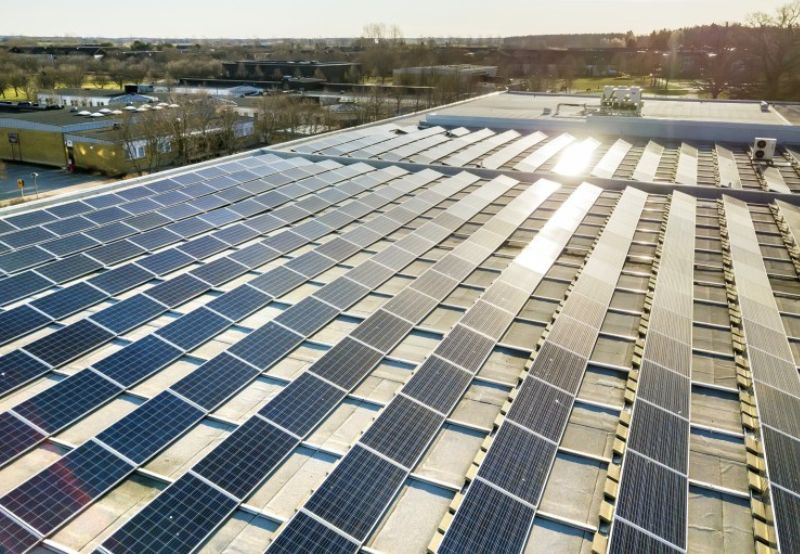
The Ministry of New and Renewable Energy (MNRE) clarified that rooftop solar projects on government buildings awarded through bidding after August 31, 2025, or commissioned on or after June 1, 2026, without an approved exemption, must use solar cells from the Approved List of Models and Manufacturers List II.
The Central Electricity Authority (CEA) notified the Central Electricity Authority (Technical Standards for Construction of Electrical Plants and Electric Lines) Amendment Regulations, 2026, introducing technical standards for the construction of renewable energy projects and battery energy storage systems.
The Appellate Tribunal for Electricity held that a solar power project cannot be treated as being in ‘shut down’ mode during night hours merely because it cannot generate electricity in the absence of solar radiation.
The Gujarat government announced a new compensation policy under which farmers will be paid twice the prevailing market value of their land acquired for erecting power transmission towers and power lines. The new policy replaces the circle rates-based system.
The Delhi government notified the Electric Vehicles Policy, 2026, introducing phased purchase incentives, scrapping benefits, exemptions from road tax and registration fees, and mandatory electrification timelines for key vehicle segments. The policy will remain valid until March 31, 2030.
The Andhra Pradesh Electricity Regulatory Commission approved the tripartite battery energy storage purchase agreements signed between state distribution companies, APTRANSCO, and seven battery energy storage system developers to procure 1,000 MW/2,000 MWh of storage capacity for 12 years.
The Directorate General of Trade Remedies initiated an antidumping investigation into imports of electric tractors from China following allegations that the low-priced imports were causing material injury to the domestic industry. Domestic manufacturer IPLTech Electric had filed a complaint alleging that dumped imports from China have adversely affected its operations.
The M.P. Power Management Company invited bids to set up 625 MW/1,250 MWh of standalone battery energy storage systems (2 units of 250 MW/500 MWh and 1 unit of 125 MW/250 MWh) under the Viability Gap Funding program. The last date to submit bids is July 30, 2026. Bids will be opened on August 4.
India must strengthen its domestic bill-of-materials and balance-of-system manufacturing ecosystem to capture more value across the solar supply chain, panelists said at the Mercom India Renewables Summit 2026. At the session “Solar BoM & BoS Manufacturing: Expanding Value Creation Across the Solar Supply Chain,” panelists discussed the growth of domestic manufacturing for solar glass, junction boxes, busbars, aluminum frames, interconnects, inverters, mounting structures, and other critical components.
Advantages such as lower power bills and reduced carbon footprints are prompting religious institutions to explore solar energy solutions and contribute to India’s clean energy transition. The Gobind Sadan Gurdwara in Chhatarpur, Delhi, has installed a 100 kW on-grid rooftop solar system to reduce its electricity costs and increase its use of clean energy.
The Steel Authority of India invited bids to set up a 4 MW rooftop solar project across multiple buildings and sheds at the IISCO Steel Plant in Burnpur, West Bengal. Bids must be submitted by August 1, 2026. Bids will be opened on the same day.
Vikram Solar commissioned its new manufacturing plant at Gangaikondan in Tamil Nadu. The facility has rolled out its first product, the Hypersol N-Type TOPCon G12R modules, which can deliver 615-640 Wp of rated power with module efficiencies of up to 23.69%.
Installed renewable energy sources helped curb fossil fuel costs by an estimated $480 billion in 2025 as the cost advantage between clean energy and conventional sources of energy continues to widen, according to the International Renewable Energy Agency. Titled ‘The Renewable Power Generation Costs in 2025’, the report estimated that over 90% of the utility-scale renewable capacity added in 2025 was cheaper than the lowest-cost new fossil alternative.
The U.S. Federal Communications Commission considering imposing a ban on the import of energy inverters from China, citing concerns that such equipment could be used to disrupt power supplies. According to undisclosed sources interviewed by Reuters, the proposed ban would apply to new foreign inverter models and could be published within 2026.


Mercom Staff
More articles from Mercom Staff.