
Data Center Demand to Accelerate Hybrid Renewables in Andhra Pradesh: NREDCAP
State targets over 160 GW of clean energy capacity and approximately ₹10 trillion in investment
September 15, 2026

Follow Mercom India on WhatsApp for exclusive updates on clean energy news and insights
Andhra Pradesh is preparing for rising power demand from data centers and other energy-intensive industries, with plans to ensure reliable clean power through hybrid, firm and dispatchable renewable energy (FDRE), and round-the-clock (RTC) solutions.
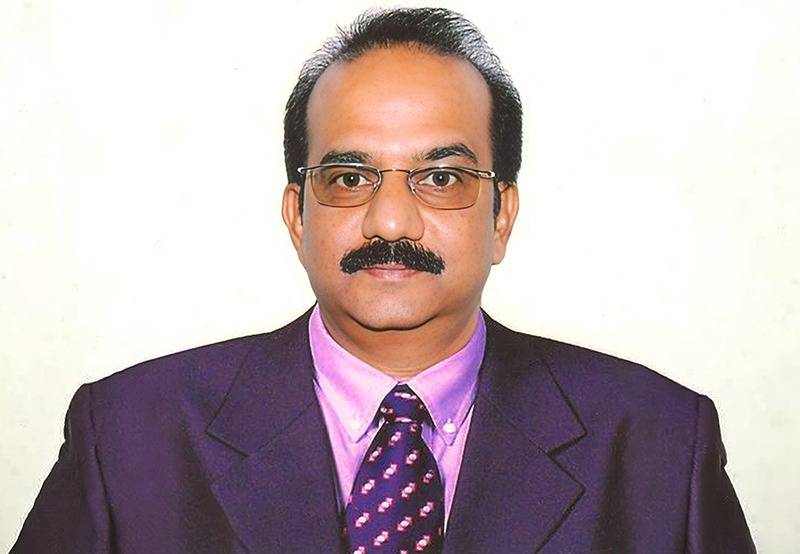
In an exclusive interview with Mercom India, M. Kamalakar Babu, Vice Chairman and Managing Director of the New & Renewable Energy Development Corporation of Andhra Pradesh (NREDCAP), discussed the state’s strategy for scaling renewable energy, its energy storage roadmap, transmission expansion, and incentives aimed at attracting investments across the clean energy value chain.
Andhra Pradesh has outlined an ambitious clean energy agenda. What are NREDCAP’s top three priorities over the next two to three years, and what measurable targets has the state set?
Andhra Pradesh has set a clear vision to emerge as India’s leading clean energy hub under the Integrated Clean Energy Policy 2024. As the state’s nodal renewable energy agency, NREDCAP’s focus over the next two to three years will be centered on three strategic priorities.
First, we are focused on accelerating large-scale renewable energy deployment and development of renewable energy zones.
We are working to facilitate investment, land availability, transmission connectivity, and project execution to help Andhra Pradesh achieve its target of over 160 GW of clean energy capacity, including 78.5 GW of solar and 35 GW of wind.
Second, as renewable penetration increases, storage will be critical to ensure grid reliability and round-the-clock clean power. The state has set targets of 22 GW of pumped storage capacity and 25 GWh of battery energy storage systems.
Third, Andhra Pradesh aims to leverage its renewable energy potential, industrial infrastructure, and port connectivity to become a major production and export hub. The state’s targets include 1.5 MTPA of green hydrogen production, 3 GW of electrolyzer manufacturing, 20 GW of integrated solar manufacturing capacity, and 5 GWh of battery manufacturing capacity.
Beyond capacity addition, our objective is to attract approximately ₹10 trillion (~$105.55 billion) in investments and create large-scale employment opportunities.
How do you see FDRE and RTC projects evolving in Andhra Pradesh, particularly as electricity demand from data centers and other large consumers increases?
We believe FDRE and RTC power will represent the next phase of growth in Andhra Pradesh’s renewable energy sector. The emphasis will shift toward delivering reliable, dispatchable, 24×7 clean power, particularly for energy-intensive consumers such as data centers, green hydrogen projects, advanced manufacturing facilities, and export-oriented industries.
The appropriate configuration of hybrid systems will vary by consumer. The solution must be designed around the consumer’s demand profile, available renewable resources, required firmness level, growth trajectory, and cost considerations.
Data centers require reliable renewable power, and we expect this demand to accelerate the adoption of hybrid renewable projects combining solar, wind, storage, and intelligent energy management systems.
Despite the presence of major industrial clusters, open access renewable energy growth in Andhra Pradesh has remained relatively limited. What are the main reasons, and what is the state doing to accelerate open access adoption?
Andhra Pradesh has historically been one of India’s leading renewable energy states. Recently commissioned solar and wind projects are predominantly implemented under captive, group-captive, and third-party sale arrangements, demonstrating the growing role of open access in the state’s renewable energy market.
Open access is becoming increasingly important as industries seek competitively priced renewable energy, long-term cost visibility, and support for their decarbonization commitments.
The state will focus on facilitating timely grid connectivity, strengthening transmission infrastructure, improving coordination among implementing agencies, and maintaining a stable and transparent policy environment.
We expect open access, including captive and group-captive projects, to remain an important driver of renewable energy capacity addition in Andhra Pradesh.
Several states are integrating storage into renewable energy procurement and grid planning. Is Andhra Pradesh considering a storage mandate for renewable energy projects or specific consumer categories?
Andhra Pradesh has not prescribed a blanket storage mandate for all renewable energy projects or consumer categories. We believe no single technology or configuration can meet every requirement of a rapidly evolving power system. The appropriate solution must be designed around the consumer’s power demand, required reliability level, cost considerations, and sustainability objectives.
Importantly, Andhra Pradesh is pursuing a two-track storage strategy.
First, we are developing large utility-scale energy storage infrastructure, including pumped storage projects and grid-connected battery energy storage systems (BESS).
The Energy Department has already initiated procurement of 1,500 MW / 3,000 MWh of standalone BESS capacity and plans to scale this to approximately 3.5 GW / 7 GWh in the coming years. These storage assets are being strategically deployed across multiple substations and load centers.
Second, we see significant potential in distributed and co-located BESS. Rather than relying solely on centralized storage assets, Andhra Pradesh is encouraging storage deployment closer to load centers and renewable generation sites. We have also initiated efforts to promote co-located BESS at existing solar and wind projects supplying to AP DISCOMs.
Is Andhra Pradesh’s transmission infrastructure keeping pace with the project pipeline? What additional evacuation and transmission capacity will be required over the next few years?
A key focus area in the coming years will be developing Renewable Energy Zones (REZs) with pre-planned transmission connectivity. We are also working closely with state and central transmission planning agencies to ensure that transmission development remains ahead of renewable capacity additions.
The future grid cannot rely solely on transmission expansion. It must also be supported by pumped storage projects, battery energy storage systems, demand response mechanisms, digital grid management tools, and distributed energy resources.
We also anticipate significant growth in power demand from emerging industrial sectors, and transmission planning must evolve from a traditional load-serving approach to a more dynamic system capable of managing two-way power flows, storage assets, and variable renewable generation.
Looking ahead, Andhra Pradesh will require additional pooling substations, renewable evacuation corridors, stronger intra-state transmission systems, enhanced inter-state connectivity, and digital grid management capabilities.
Several solar manufacturing and renewable energy value chain projects have been announced in Andhra Pradesh. What state-level incentives are being offered, and how successful have they been in attracting manufacturers and developers?
The state is offering a comprehensive incentive package, including support for land allocation, transmission connectivity, open access facilitation, exemptions or concessions on electricity duty and network charges, capital support for clean energy technologies, and streamlined approvals.
The Integrated Clean Energy (ICE) Policy also provides dedicated incentives for solar and wind manufacturing, battery manufacturing, electrolyzer manufacturing, green hydrogen projects, and other clean energy value chain investments.
Since the launch of the ICE Policy, Andhra Pradesh has already approved project proposals covering approximately 50 GW of clean energy capacity, while overall investment commitments in the sector have crossed ₹4.10 trillion (~$43.28 billion). These proposals are at different stages of development.
Andhra Pradesh’s strategic advantages, including abundant renewable resources, availability of large land parcels, excellent port infrastructure, strong industrial base, and proximity to emerging export markets, are proving highly attractive for investors.
The discussion comes as Visakhapatnam emerges as a major destination for data centers and other high-load industries, potentially creating significant demand for firm renewable power. These evolving energy requirements and the solutions available to C&I consumers will also be among the key themes at Mercom India’s Vizag C&I Clean Energy Meet on September 24.


Melvin Mathew
More articles from Melvin Mathew.