

Delhi Vidhan Sabha’s Heritage Building Goes Green, Saves on Power Bills
The rooftop solar project was installed by Lumen City

Follow Mercom India on WhatsApp for exclusive updates on clean energy news and insights
Consumers in India are increasingly turning to solar to lower their power costs and reduce dependence on conventional energy sources. While commercial, industrial, and residential consumers continue to help drive clean energy adoption, government institutions are also joining the bandwagon.
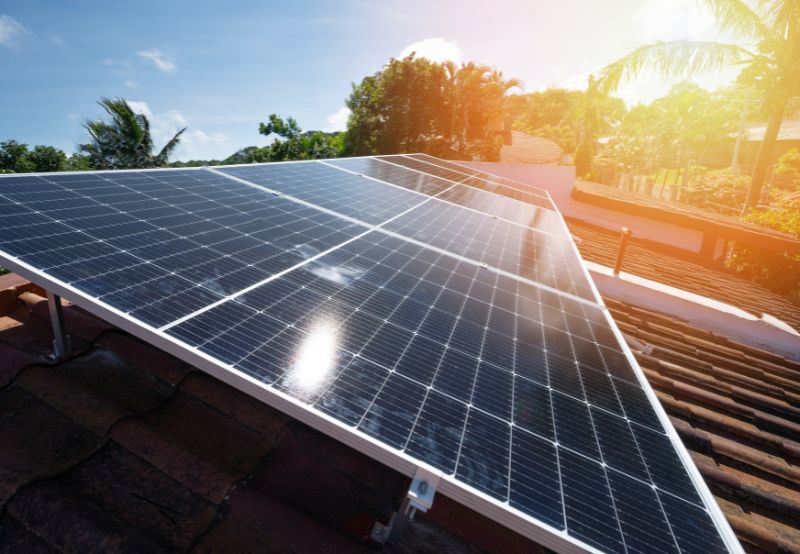
The Delhi Vidhan Sabha recently commissioned a 500 kW rooftop solar system costing ₹29.4 million (~$307,112). The project was completed within 90 days.
The expected return on investment for the rooftop solar system is five to six years.
The solar energy will be used for regular building consumption, from legislature sessions to regular office work. The solar project meets nearly all of the building’s energy requirements, except for a few special/VIP events that significantly increase power consumption for short periods.
The new rooftop system replaces a 200 kW rooftop solar project that generated less than 10% of its rated capacity. This was caused by significant shading and infrastructure degradation.
The Vidhan Sabha’s average monthly electricity consumption ranges between 60,000 kWh and 80,000 kWh. Inaugurated in August 2025, the solar project generated over 558,000 kWh by May 2026 and saved ₹4.4 million (~$45,864.48) in electricity bills.
Another 330 kW solar project is under installation at the Vidhan Sabha, with a 50 kW solar-battery hybrid system for outdoor street and garden lighting.
The 500 kW rooftop solar system was installed by Lumen City. The project uses 850 TOPCon solar modules, each rated at 590 W, which were sourced from vendors approved under the Approved List of Models and Manufacturers.
According to Lumen City, the TOPCon technology was selected for its higher efficiency output and was critical for achieving the 500 kW capacity target within the Vidhan Sabha’s constrained rooftop area.
The system was installed under multiple constraints due to the Delhi Vidhan Sabha complex’s heritage and governmental importance.
The civil engineering department prohibited any drilling or hole-making in the building’s roof lintel, which informed the solar project’s structural design. Installation work had to stop during Assembly sessions, considerably constraining the project completion window.
Advance approvals from security authorities were required for material movement, vehicle access, and crane deployment. Coordinating such logistical needs alongside active construction added complexity.
Lumen City determined the rooftop solar potential by undertaking a drone survey and 2D aerial mapping of the rooftop area. This provided the engineering team with precise dimensional data for installing the solar projects. Lumen City used this information to develop a custom structural design for the installations.
The company also raised the mounting structure height to 14 ft. With this change, the solar panel arrays extend beyond the Vidhan Sabha’s parapet walls on both sides, increasing the usable installation area beyond the roof’s physical boundary.
However, the solar system’s increased height and wide spacing meant that single standard hot-dip galvanized iron pipe sections used in mounting structures could not span across the required distances. Lumen City addressed this challenge by using custom-designed trusses engineered to distribute loads efficiently while remaining lightweight.
The elevated mounting structure also helped address challenges posed by tree shading. Lumen City installed 425 SolarEdge panel-level power optimizers to address power degradation caused by individual panels shaded by trees.
As the Vidhan Sabha is an old building, the team at Lumen City conducted rebound hammer testing and ferro scanning to assess its lintel strength before finalizing the load distribution design. The team, using information from these tests, installed the elevated solar mounting structure to transfer approximately 75% of its total weight to the Vidhan Sabha’s masonry walls rather than to the roof lintel.
Solar installations on the building were also affected by monkey interference. Lumen City could not install perimeter fencing, which would have compromised the Vidhan Sabha’s heritage aesthetics. The company addressed this issue by focusing on securing all vulnerable electrical components.
The solar project uses a SolarEdge inverter configuration. This setup includes four 100 kW and two 66 kW inverters.
Following the Vidhan Sabha installation, Lumencity completed a 50 kW on-grid rooftop solar project at the Delhi Chief Minister’s Office.
India’s rooftop solar capacity grew to 7.1 GW in the calendar year 2025, an over 123% year-over-year jump from 3.2 GW in 2024, according to Mercom India Research’s Q4 & Annual 2025 India Rooftop Solar Market Report.


Parth Shukla
More articles from Parth Shukla.