

Milky Mist Banks on 25 MW Solar Project for Energy Self-Sufficiency
The newly commissioned 10 MW facility takes the company’s renewable energy capacity to 41 MW

Follow Mercom India on WhatsApp for exclusive updates on clean energy news and insights
Contributing nearly a quarter of the world’s milk supply, India’s dairy industry employs more than 80 million farmers. As the sector expands, powering continuous production while meeting stringent food safety standards can be challenging for milk and dairy product manufacturers, especially as they scale operations.
The reliance on grid power can add to operating costs and expose dairy production facilities to supply disruptions, potentially affecting production efficiency. To tackle these challenges, dairy companies are increasingly turning to solar and other renewable energy sources to supplement grid power, lower electricity costs, and improve the reliability of their energy supply.
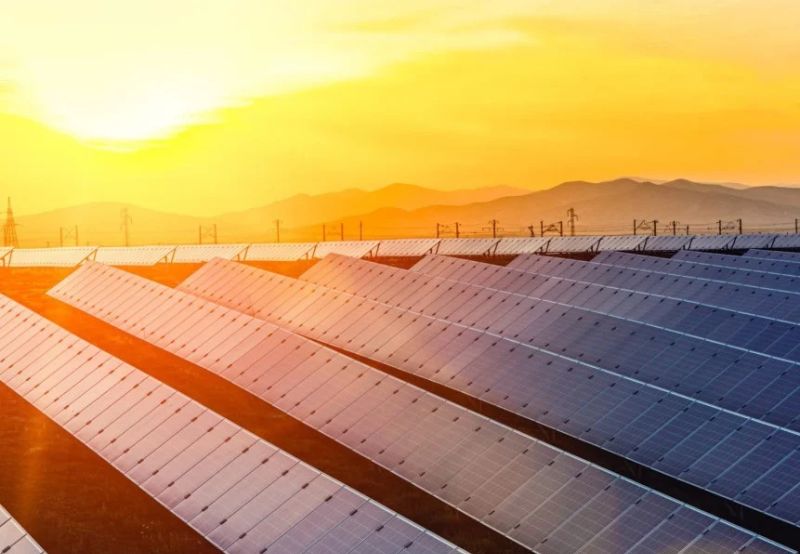
The shift is paving the way for higher savings and lower costs for brands like Milky Mist, which recently commissioned a 10 MW solar project in Arasanoor in Sivaganga district, Tamil Nadu. The company had earlier commissioned a 15 MW solar project at the same location.
The company claims that the two facilities are expected to generate enough electricity to meet its annual power requirements.
The facilities will also support the power requirements of the company’s integrated manufacturing facility at Perundurai, and its milk chilling centers across multiple locations. So far, the company has invested ₹1.096 billion (~$11.43 million) in developing the two facilities.
Currently, Milky Mist’s cumulative renewable energy capacity stands at 41 MW. Its solar power installations at Chithode (5 MW), Kavilipalayam (9 MW) and Arasanoor have been set up on arid land that’s not suitable for farming, enabling the company to use such land productively. The company has also set up a 2 MW wind energy project at Kayathar.
Since commissioning its first solar plant in 2016, Milky Mist has invested close to ₹1.97 billion (~$20.54 million) in renewable energy generation plants and cumulatively generated approximately 210 million units of power during the period.
The company’s solar plants are designed for a minimum operating life of approximately 28–30 years, with the installed capacity expected to generate around 1,400 million units of electricity over its lifecycle.
Given solar’s potential to pare down costs and stabilize power supply across the value chain, dairy companies and milk unions are increasingly deploying solar power across their operations.
An Andhra Pradesh’s dairy cooperative, Krishna Milk Union, commissioned a 650 kW rooftop solar installation at its plant in Veeravalli, Krishna District, in 2025. Before adopting solar, the dairy’s average daily energy consumption stood at around 6,000 units. With the rooftop system in place, KMU expects to reduce its electricity bills by nearly 50%, significantly strengthening operational efficiency.
In Rajasthan’s remote villages, camel herders and farmers from the Raika community are using solar-powered chillers to preserve camel milk and supplement their income. The chillers can cool up to 500 liters of milk every day.
Mercom India hosts C&I Clean Energy events in different cities across India to educate businesses about how they can navigate through challenges in renewable energy adoption arising from factors such as technology, financing, project economics, and execution. The next C&I event will be held in Lucknow on October 9, 2026.