

Renewable O&M Moving Toward Data-led Asset Performance Management: Interview
The challenge is to coordinate storage with generation rather than managing the two independently
September 29, 2026

Follow Mercom India on WhatsApp for exclusive updates on clean energy news and insights
India’s commercial and industrial (C&I) consumers are increasingly moving toward round-the-clock energy solutions by integrating storage with renewables. As renewable energy portfolios become more complex, operations and maintenance (O&M) practices are also evolving to focus on predictable generation, asset performance, and storage integration.
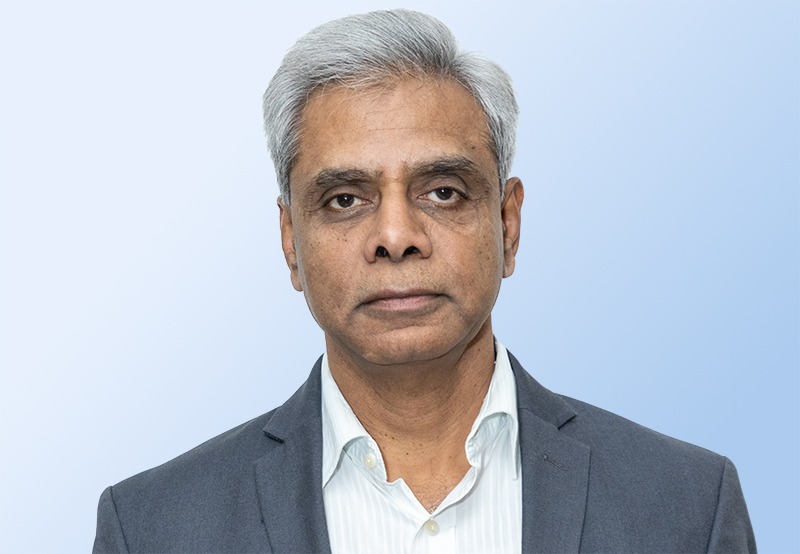
In an interview with Mercom India, Kota Bhanu Prakash, CEO and Board Member, STEAG Energy Services India (a Bluspring Enterprise), discussed the changing role of O&M, the integration of battery storage, advanced diagnostics and artificial intelligence (AI), and the operational challenges associated with delivering reliable renewable power.
As renewable energy becomes a larger part of C&I power procurement, what new operational challenges are emerging in managing intermittency, reliability, and round-the-clock power requirements?
The operational challenge is shifting from procuring MWs to ensuring predictable, round-the-clock (RTC) delivery. Solar and wind are variable, while continuous industrial operations require reliable supply. Balancing generation profiles, grid availability, and transmission requires a system-level view.
Achieving RTC supply requires integrating hybrid portfolios, BESS, demand forecasting, and flexible thermal generation. Existing thermal fleets will also need greater flexibility to ramp faster and handle cycling, helping bridge the gap between variable renewable generation and industrial demand while managing the impact on safety, heat rate, and asset life.
How is the role of O&M changing as renewable projects move beyond maximizing generation toward delivering predictable and reliable power?
Renewable O&M is shifting from routine maintenance to data-led asset performance management. As developers bring basic O&M in-house, demand is rising for specialized services that can improve yields, maximize performance, and reduce downtime.
The key question for asset owners is no longer just how much power was generated, but whether it was delivered during contracted hours, met availability standards, and protected long-term asset value. This is particularly critical in hybrid and storage-backed power purchase agreements (PPAs) with deviation penalties.
Modern O&M must combine field engineering with continuous condition monitoring, predictive analytics, root-cause diagnostics, and generation forecasting to identify and prevent performance losses proactively across the asset lifecycle.
What are the biggest sources of performance loss in operating solar and wind projects today, and how much can realistically be addressed through better O&M practices?
Performance losses stem from environmental, equipment, and operational factors. In solar, soiling, shading, equipment degradation, inverter and electrical issues, and availability losses are common concerns. In wind, under-generation, component condition, and turbine and blade performance can have a significant impact.
Distinguishing unavoidable weather-related losses from operational performance gaps can help operators identify where O&M interventions can improve asset performance. Incorporating O&M considerations during engineering and commissioning can also help address potential performance issues earlier in the project lifecycle.
How effective are advanced diagnostics such as thermography, electroluminescence testing, drone inspections, remote monitoring, and predictive analytics in identifying performance losses?
Advanced diagnostics are highly effective, but their value depends on translating data into timely, practical action in the field. Thermography, electroluminescence testing, and drone inspections can identify physical defects and hotspots, while predictive analytics can provide early warnings of equipment issues before they result in failures.
However, generating data alone is not sufficient. Excessive or poorly prioritized alerts can overwhelm operating teams. The most effective model combines digital diagnostics with experienced power engineers who interpret the data, prioritize high-risk issues, and enable field teams to respond with the appropriate resources and replacement parts.
As battery storage deployment accelerates, how does integrating BESS change the way renewable assets need to be designed, operated, and managed? What new challenges does it introduce?
Integrating BESS transforms renewable projects from intermittent generators into dispatchable energy systems. Operations must move beyond generation availability to managing state-of-charge, charge-discharge cycling, grid-code compliance, and cell thermal safety.
The bigger challenge will be coordinating storage with renewable generation rather than managing the two independently. This will require stronger capabilities in storage optimization, predictive monitoring, and lifecycle management, with both assets increasingly managed as an integrated energy system.
AI is increasingly being discussed across the power sector. Where is it already delivering measurable value in renewable energy, and which applications remain more promise than practical reality?
AI delivers tangible value where it supports specific, high-frequency operational decisions. The most practical applications today are forecasting, anomaly detection, predictive maintenance, asset-performance monitoring, and maintenance optimization.
Accurate AI-driven forecasting directly reduces deviation penalties for asset owners, while early anomaly detection prevents minor electrical faults from causing major outages.
Looking five years ahead, how do you expect India’s renewable energy services market to evolve? Which capabilities will become most critical as the industry moves toward hybrid generation, storage, digital asset management, and more sophisticated C&I power procurement?
India’s renewable services market will mature from a capacity-addition phase to an outcome-driven performance and lifecycle management phase. As battery storage grows towards the 236 GWh that CEA projects India will need by 2031-32, operating hybrid, BESS and grid-connected systems will demand integrated capabilities. Winning providers must combine deep engineering, predictive digital diagnostics, storage operations, and unified facility management.


B.S. Nagaraj
More articles from B.S. Nagaraj.