
Solar Plus Storage Push Reshapes C&I Renewable Energy Strategy
Rising costs, new policies drive shift to hybrid, RTC models
May 6, 2026

Follow Mercom India on WhatsApp for exclusive updates on clean energy news and insights
India’s commercial and industrial (C&I) energy procurement landscape has changed significantly. Rooftop solar, once seen as the ultimate solution, is now being positioned as the starting point of the C&I sector’s transition to clean energy. Rising tariffs, new policies, and the demand for green power are pushing industries to adopt a mix of solar, wind, and battery storage.
While rooftop solar cannot meet the full energy requirements of most industrial consumers, it eliminates land and transmission costs, delivering the lowest levelized cost of electricity.
As Rahul Makhaniya, Chief Marketing Officer at Soleos Energy, pointed out, rooftop solar is “the cheapest source of renewable energy, on your premises,” making it the logical first step for any business.
However, regulatory and physical constraints restrict its potential. In Maharashtra, installations are limited to 1 MW or the sanctioned load, and space availability further restricts expansion.
Even at full capacity, rooftop systems typically offset only 40% to 60% of consumption, leaving a gap that must be filled through other renewable sources.
Hybrid Power
To address this gap, industries are increasingly adopting open access renewable energy from large-scale solar and wind projects. More significantly, hybrid systems that combine solar, wind, and storage are emerging as the preferred model for reliable power supply.
Solar generation is limited to daylight hours, while industrial demand often peaks in the evening. Hybrid solutions bridge this mismatch by integrating multiple energy sources such as solar, wind, and battery storage, enabling supply over longer durations.
These systems can deliver power for extended periods, up to 20 to 24 hours in some configurations, helping companies offset up to 90% to 95% of their electricity bills.
Firm and Dispatchable Renewable Energy (FDRE) and Round-the-clock (RTC) solutions are also gaining traction. These allow companies to schedule power consumption during peak tariff periods, offering flexibility and better cost optimization.
However, Maharashtra’s limited high-quality wind resources remain a challenge. With plant load factors of 28% to 32%, compared to 34% to 35% in states like Gujarat and Rajasthan, developers are increasingly sourcing power from other states via the interstate transmission system (ISTS).
Nitin Jain, General Manager- Business Development at Inox Neo Energies, highlighted that industries with higher demand are moving toward hybrid and RTC models. The demand is particularly strong among energy-intensive sectors such as steel, cement, and chemicals, where uninterrupted power is essential for operations.
RTC Power: Cost Versus Certainty
RTC power is changing how industries evaluate energy economics. While RTC tariffs are higher than standalone solar, the value lies in reliability and peak-hour savings.
While solar-plus-storage systems address part of the demand, RTC solutions offer a more comprehensive alternative. Though the prices range from ₹5.5 (~$0.058) to ₹6.5 (~$0.069)/kWh, they can replace grid electricity, which costs up to ₹12 (~$0.127)/kWh during peak hours.
Another major advantage is price stability. Long-term agreements allow companies to lock in electricity costs for up to 25 years, which is increasingly appealing in a volatile energy market.
As Makhaniya emphasized, this effectively allows businesses to “lock their raw material cost for 25 years,” transforming energy procurement into a strategic tool rather than a variable expense.
Policy Shifts Accelerate Change
Regulatory changes are playing a central role in accelerating this transition. Reduced banking rules, stricter open-access regulations, and the introduction of time-of-day (TOD) tariffs are encouraging industries to align consumption more closely with real-time generation.
Earlier, companies could bank extra renewable energy with minimal losses and use it later. With banking now limited, that flexibility has reduced.
Renewable Purchase Obligations (RPOs) are adding further pressure, particularly on high-emission industries such as cement and steel. These mandates require companies to source a fixed percentage of their power from renewable sources, making clean energy adoption unavoidable.
Global supply chain dynamics are also influencing decisions. Companies supplying to multinational corporations are increasingly required to demonstrate sustainability compliance, effectively accelerating clean energy adoption.
Battery Storage
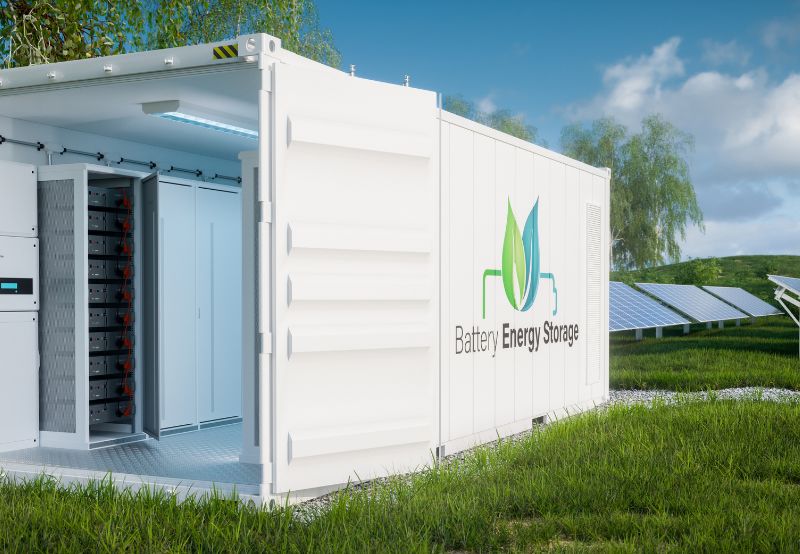
Battery energy storage systems (BESS) are playing a crucial role in this transition. Once considered optional, storage is now becoming essential in many cases.
New policy frameworks now mandate integrating storage with solar installations, typically at 50% of installed capacity for two hours. This means a 500 kW solar project must be paired with a 500 kWh battery storage system.
The initial investment for battery storage systems ranges from ₹10 million (~$106,000)/MWh to ₹12 million (~$127,000)/MWh, with a lifecycle of 7,000 to 8,000 cycles. The addition of battery storage increases electricity costs by roughly ₹2 (~$0.021)/kWh to ₹2.5 (~$0.027)/kWh, but the ability to shift load and manage peak demand helps offset this increase.
Long-Term Demand
The push toward storage is also being driven by broader grid dynamics. Maharashtra’s renewable energy capacity has grown rapidly, reaching about 31 GW, with significant expansion expected in the coming decade.
Arvind Limje, Senior General Manager (Head of Inverter and BESS) at Lauritz Knudsen, noted that the state aims to source nearly 60% of its energy from renewables by 2035–36. Achieving this would require an additional 70 GW of capacity and nearly 100 GW of energy storage.
“Energy storage acts as a main pillar of energy transition,” he observed, highlighting its role in stabilizing a grid increasingly dominated by intermittent renewables.
Energy Management
Energy Management Systems (EMS) and Power Conversion Systems (PCS) play a central role in optimizing operations, as modern installations integrate multiple sources, grid, solar, wind, diesel generators, and storage, into a single ecosystem.
These systems make real-time decisions on when to use stored energy, when to draw from the grid, and how to optimize costs and efficiency.
Rather than relying on manual intervention, automated systems now determine the most cost-effective energy mix at any given moment, maximizing renewable energy utilization while reducing energy wastage.
Rethinking Savings
The concept of savings itself is evolving. Instead of focusing solely on per-unit cost reductions, companies are now evaluating total cost savings, energy reliability, and sustainability goals together.
Three broad scenarios illustrate the trade-offs involved. In a low adoption model, where renewable energy accounts for around 30% of total power consumption, companies can achieve savings of about ₹4 (~$0.042)/kWh. In a medium adoption scenario with 60%-75% renewable integration, savings fall to around ₹3 (~$0.032)/kWh, while overall renewable energy and total savings increase.
At the highest level, a full RTC-based approach enables 100% renewable coverage, though per-unit savings drop to approximately ₹2 (~$0.021)/kWh, reflecting the premium paid for reliability and round-the-clock supply.
Financing models dictate the economics of these decisions. In the captive model, companies invest their own capital, leading to higher upfront costs but faster equity recovery, typically within three to four years.
The OPEX model eliminates upfront investment, allowing adoption without capital expenditure, albeit with lower savings.
The group captive model strikes a balance, requiring moderate investment while offering relatively faster payback periods, making it an increasingly attractive option for many industrial consumers.
Each option involves trade-offs between cost, reliability, and sustainability. The optimal choice depends on consumption patterns, industry type, and long-term strategy.
The discussions at Mercom India’s Mumbai C&I Clean Energy Meet outlined how India’s C&I sector is entering a new phase, defined not just by solar adoption, but by integrated, storage-backed energy solutions that prioritize reliability alongside cost.
The next Mercom India C&I Clean Energy Meet event will be held in Jodhpur on May 15, 2026.


Meghana Prasad
More articles from Meghana Prasad.