

Daily News Wrap-Up: Extreme Weather Puts Solar Modules to the Test
India’s solar industry shifts focus to timely module sourcing
June 5, 2026

Follow Mercom India on WhatsApp for exclusive updates on clean energy news and insights
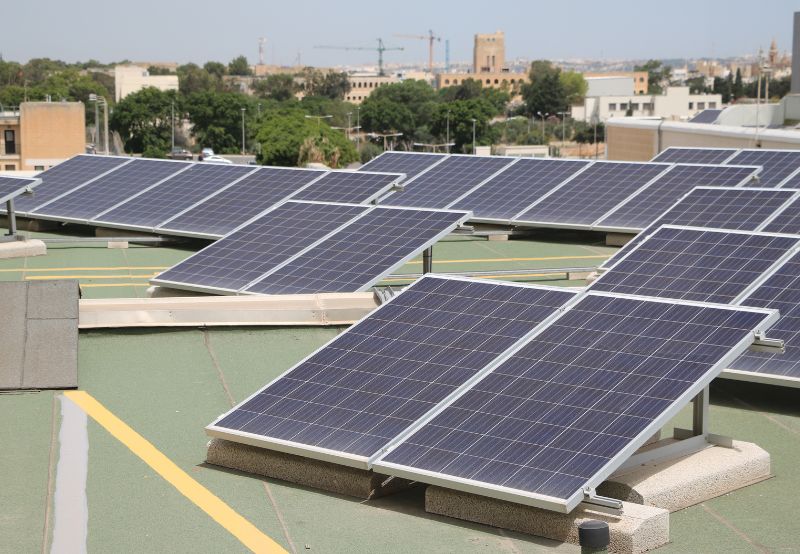
Recent extreme weather events in Rajasthan and other parts of the country raised concerns about the structural durability of rooftop solar installations, with industry experts citing aluminum frames used in solar modules as a key vulnerability. During high winds and storms, several solar modules have reportedly been bent, torn, or detached.
Rising solar demand across India, driven by rooftop subsidies, clarity on open access, and commercial and industrial adoption, is prompting developers and engineering, procurement, and construction (EPC) contractors to update their project execution strategies. According to industry experts, companies are shifting procurement decisions more closely towards domestic manufacturing availability, compliance with the Approved List of Models and Manufacturers, and solar system quality, durability, and reliability.
The Maharashtra Electricity Regulatory Commission approved the Maharashtra State Electricity Distribution Company’s (MSEDCL) proposal for long-term procurement of 2,500 MW of round-the-clock renewable energy. The Commission adopted a tariff of ₹5.90 (~$0.06)/kWh and directed MSEDCL to submit the final signed power purchase agreement.
The Tamil Nadu Electricity Regulatory Commission issued the State Load Dispatch Center (SLDC) Functions and Accountability Regulations, 2026, mandating renewable energy generating stations, nuclear power stations, and run-of-river hydro stations be treated as must-run stations and should not be curtailed except for grid security reasons.
The Rajasthan Electricity Regulatory Commission held that the reduction in goods and services tax on renewable energy devices and parts from 12% to 5% will be treated as a change-in-law event under power purchase agreements signed in the state. The revised GST rate took effect in September 2025.
NTPC Renewable Energy (NTPC REL) invited bids for an EPC package to develop a 240 MW grid-connected solar project near Devikot in Rajasthan. The scope of work includes design, engineering, manufacturing, supply, packing and forwarding, transportation, unloading, storage, installation, testing, and commissioning of the solar project, including the supply of solar modules. The last date to submit bids is June 26, 2026. Bids will be opened on the same day.
NTPC REL issued an EPC tender to set up a 550 MW grid-connected solar project near Shimbhoo Ka Bur in Rajasthan. Bids must be submitted by June 26, 2026. Bids will be opened on the same day. The scope of work entails the designing, engineering, manufacturing, installation, testing, and commissioning of the solar project. It also involves providing operation and maintenance services for three years.
Telecommunications Consultants India invited expressions of interest to select a pre-bid consortium or backend partner to supply, deliver, and install 645 solar systems, with a cumulative capacity of 31,210 kW at public facilities across Ghana. The projects are spread across the country, including Greater Accra, Central, Western, Western North, Volta, Oti, Eastern, Ashanti, Ahafo, Bono, Bono East, Northern, North East, Upper East, Savannah, and Upper West regions.
Inox Clean Energy, the renewables arm of INOXGFL group, signed a definitive agreement to acquire Vena Energy India’s 6 GW renewable energy portfolio. Vena Energy India’s portfolio includes 1.2 GW of operational renewable energy assets, 1.8 GW of projects at an advanced stage of development and nearing commissioning, and 3 GW of projects under development.
Australia is assessing the potential development of a 50,000-ton-per-year solar-grade polysilicon facility at the Hunter Energy Hub in New South Wales, according to a study supported by the Australian Renewable Energy Agency. According to the report, the proposed facility in Australia could produce 50,000 tons of ultra-pure polysilicon annually, enough to support about 27 GW of solar module manufacturing.


Mercom Staff
More articles from Mercom Staff.