

India’s Solar Growth Shifts Focus to Storage, Land Readiness, and Grid Connectivity
Mercom India’s RE Buyer-Seller Meet was held in Jodhpur on May 14

Follow Mercom India on WhatsApp for exclusive updates on clean energy news and insights
India’s solar market is gradually transitioning from a phase primarily driven by capacity additions to one increasingly centered on execution readiness and system integration. Demand continues to rise across rooftop, commercial and industrial (C&I), distributed solar, and utility-scale projects. However, developers are now required to plan more comprehensively for storage integration, inverter availability, land readiness, grid connectivity, mounting structure quality, and domestic supply chain reliability.
Industry experts feel that in states such as Rajasthan, where solar potential remains high, but voltage fluctuations, rising land costs, and project execution challenges persist, the next phase of industry growth will depend heavily on how quickly supporting infrastructure and operational ecosystems mature.
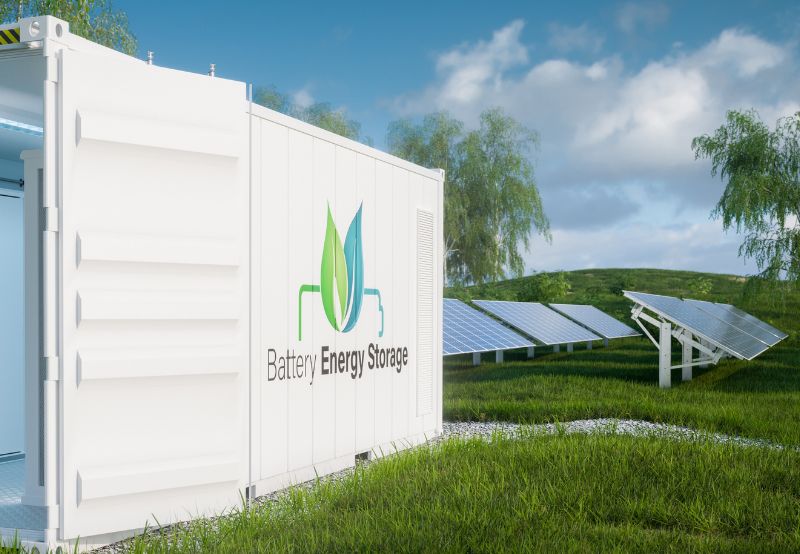
Growth of Hybrid Inverters and Battery Storage
Pratibha Sharma, Head of Sales and Marketing for North India at Ningbo Deye New Energy, said, “Demand for hybrid inverters and battery-backed solar solutions has been rising as customers across homes, schools, colleges, commercial units, and industries seek reliable power backup. Service has become the backbone of the solar industry, with customers increasingly evaluating not just pricing, but also long-term product quality, warranties, after-sales support, and installation reliability.”
Hybrid inverters are gaining traction because users want to reduce dependence on diesel generators and manage power outages more effectively.
Sharma said Deye supplies hybrid inverters ranging from 3 kW to 80 kW, with five-year inverter warranties and 10-year battery warranties.
Demand for hybrid inverters and battery energy storage systems is rising rapidly across both residential and commercial segments to provide backup power, manage high nighttime electricity tariffs, and replace diesel generators.
Sharma added that rooftop solar demand has increased sharply, especially in the residential segment, and inverter suppliers are struggling to keep pace with sudden spikes in demand. “Project developers often complete module and structure installation but face delays when inverters are unavailable, making procurement planning increasingly critical.”
Rise of Distributed Solar and Agrivoltaics
Speaking about land optimization for solar projects, Harshal Akhouri, Co-founder at Strolar India, said land optimization has become central to solar project economics. Over the past three to four years, land costs in high-energy corridors have increased by 20% to 30%, pushing developers to pursue higher capacity utilization factors and greater energy density from available land parcels.
Akhouri noted that distributed projects often suffer when even a small portion of land remains unavailable, directly affecting commissioning schedules and project revenues.
He emphasized that tracker design must account for local land conditions, terrain, contouring requirements, grading costs, and weather patterns rather than relying on standardized imported systems with fixed row configurations.
He added that Strolar develops adaptable mounting systems designed for varying land parcels and project requirements. For distributed solar and PM-KUSUM projects, pre-assembled, readily deployable systems can reduce installation timelines and reliance on on-site skilled labor.
Discussing agrivoltaics, Akhouri said, “Mounting systems must support both power generation and agricultural activities. Developers need to design systems around crop type, sunlight requirements, shade patterns, clearance, tilt angles, and long-term maintenance access.”
He also highlighted the growing use of ground screws in agrivoltaic projects because they reduce curing time and shorten installation schedules. Unlike concrete foundations, which may affect soil pH and fertility, ground screw systems can be removed at the end of the project lifecycle, helping preserve agricultural land quality. Ground screw systems can also significantly accelerate installation timelines, enabling earlier project commissioning and improving overall project economics.
Cell Manufacturing to Grow
Indian solar module manufacturers are increasingly pursuing backward integration strategies to strengthen supply chains, expand domestic capacity, and reduce the widening gap between domestic supply and market demand.
Mohammad Hussain Khan, AGM-Sales at Insolation Energy, said the June 2026 implementation timeline for the Approved List of Models and Manufacturers (ALMM) List II would ultimately benefit the domestic industry, although the transition could create short-term disruptions because supply and demand remain misaligned.
India’s cumulative cell manufacturing capacity stood at around 27 GW at the end of 2025, compared to the annual demand of nearly 60 GW. However, Khan said, continued government support is expected to gradually bridge this gap.
Khan added that Insolation Energy is working toward deeper vertical integration, including expansion into aluminum frame manufacturing and solar cell production. The company plans to establish 12,000 metric tons of aluminum-frame capacity and a 4.5 GW cell line, with the cell manufacturing line expected to commence operations within the current calendar year.
India’s 2030 clean energy ambitions will require annual renewable energy capacity additions of around 50 GW. However, transmission infrastructure, load availability, land acquisition, skilled workforce, and standardization of mounting systems continue to remain key industry challenges.
Experts believe that land availability and evacuation readiness should be treated as prerequisites in project planning and detailed project reporting, rather than as issues addressed later in execution.
These discussions were part of Mercom India’s RE Buyer-Seller Meet in Jodhpur. The next Buyer-Seller Meet will be held in Bengaluru on July 24, 2026.
Mercom is also hosting the sixth edition of its Renewables Summit, the largest conference in the sector, on July 1 and 2 this year at the Hyatt Regency, New Delhi. It brings together diverse stakeholders who are shaping India’s renewable energy industry.


Rakesh Ranjan
More articles from Rakesh Ranjan.