
MENA Weekly Roundup: Morocco Added Over 1 GW of Solar Capacity in 2025
Here are some noteworthy cleantech news and announcements from around the Middle East and North Africa region this week
June 9, 2026

Follow Mercom India on WhatsApp for exclusive updates on clean energy news and insights
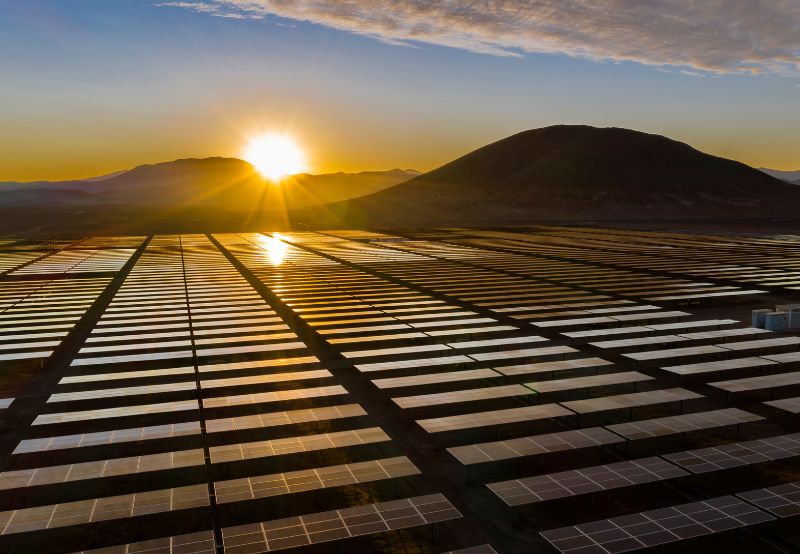
Morocco exceeded 1 GW of installed solar power capacity for the first time, reaching 1.09 GW by the end of 2025, according to the Energy Research Unit. The milestone follows an increase from 0.951 GW in 2024, representing nearly 15% annual growth and making Morocco Africa’s third-largest solar power producer.
Tunisia was among the top ten Arab importers of Chinese solar panels in April 2026, according to a report by Energy Research Unit. The report noted that deliveries of solar panels from China to the North African market increased significantly during the year. Egypt and Morocco were the top importers from China, with Tunisia coming in seventh. The country’s imports rose from 10 MW in April 2025 to 80 MW in April 2026, growing 700% annually.
Saudi Energy commissioned the grid-side grid-forming battery energy storage system project, with a total installed capacity of 2.5 GW spanning five locations: Riyadh, Rabigh, Dawadmi, Al Jouf, and Qassim. Delivered by Alfanar Projects as the engineering, procurement, and construction contractor and equipped with advanced battery systems supplied by BYD Energy Storage, the project has successfully completed grid-tied charging and discharging tests and is now operational. Part of the Saudi Electricity Company’s Phase III Energy Storage Program, the energy storage project is designed to enhance grid stability, improve renewable energy integration, and strengthen power system reliability.
Renewable energy capacity across Arab Energy Organization (AEO) member states grew by nearly 36% in 2025, driven by major investments in solar and other clean energy projects. According to the AEO’s annual report, renewable energy production capacity increased by about 10.3 GW during the year, reaching 39.2 GW, compared with 28.9 GW in 2024. Saudi Arabia led the expansion with 5.7 GW of new capacity, followed by Egypt (1.5 GW), the UAE (1.3 GW), Qatar (0.9 GW), Syria (0.7 GW), Tunisia (0.1 GW), and Bahrain (0.05 GW). Despite the growth, the region accounted for only 0.8% of global renewable energy capacity, estimated at 5,149 GW.


Meghana Prasad
More articles from Meghana Prasad.