

Month in a Minute: Top Headlines from the Indian Renewable Sector in May 2026
India added 2.7 GW of rooftop solar capacity in Q1
June 2, 2026

Follow Mercom India on WhatsApp for exclusive updates on clean energy news and insights
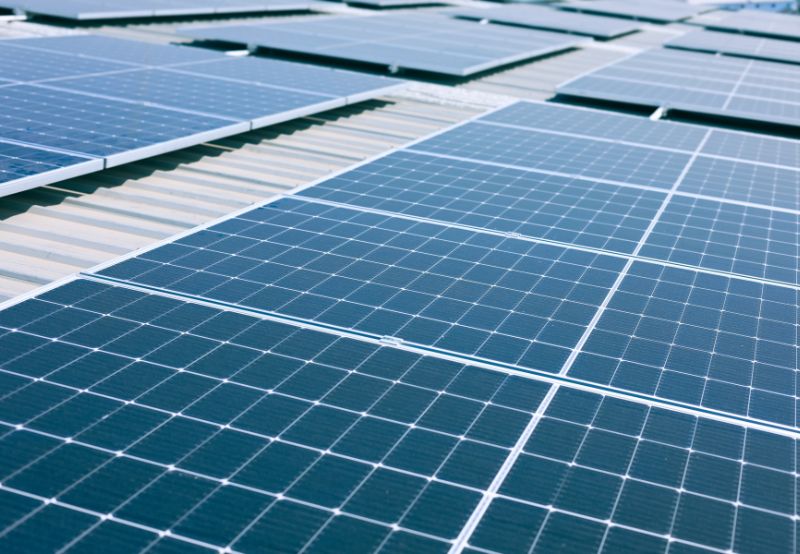
India added 2.7 GW of rooftop solar capacity in the first quarter of 2026, a YoY growth of 125.4% from 1.2 GW and a 25.4% QoQ jump from 2.2 GW, according to Mercom India Research’s newly released Q1 2026 India Rooftop Solar Market Report. India’s cumulative rooftop solar installations reached 23.5 GW at the end of March 2026.
India added 2.7 GW of solar open access capacity in Q1 2026, according to Mercom India’s Q1 2026 India Solar Open Access Market Report, marking a 55% QoQ increase from 1.7 GW and 160% YoY increase from 1 GW. The growth was driven by a combination of regulatory push, anticipated supply-side concerns, supportive state-level policies, stronger market outreach, and improved project execution across key markets.
Corporate funding in the solar sector rose to $11.1 billion across 53 deals in the first quarter of 2026, marking a 131% YoY increase from the $4.8 billion raised across 39 deals in Q1 2025, according to Mercom Capital Group’s newly released Q1 2026 Solar Funding and M&A Report. The funding also increased by 127% quarter-over-quarter (QoQ) from the $4.9 billion secured through 48 deals in Q4 2025.
In Q1 2026, India achieved a significant milestone, generating approximately 52 billion units (BU) of solar power, registering a 24.3% YoY increase, as reported by the Central Electricity Authority. Solar generation also recorded a 27% QoQ increase from 41.1 BU, highlighting positive momentum.
India added nearly 1.6 GW of wind power capacity in Q1 2026, up 14% QoQ from 1.3 GW. The capacity additions fell 16% YoY from 1.8 GW, according to Mercom India Research. India recorded its highest-ever annual wind capacity addition of 6.3 GW in 2025, an 85% YoY increase from 3.4 GW.
In 2025, inverter shipments to solar projects in India increased 40.8% compared to 2024, driven by record installations and a strong project pipeline targeted for commissioning in the first half of 2026, ahead of the phased reduction in interstate transmission systems charges waiver. The upcoming Approved List of Models and Manufacturers List II deadline created uncertainty around cells and module availability, prompting developers to accelerate project execution during the year.
India is seeing an increased adoption of solar tracking systems, particularly in utility-scale projects, to maximize energy generation. By improving energy yield without additional land, trackers are becoming essential for developers, EPCs, and industrial users seeking higher efficiency, faster returns, and optimized project performance.
Corporate funding for energy storage companies, including venture capital investments, public market funding, and debt financing, increased 5% year-over-year (YoY) in the first quarter (Q1) of 2026, according to Mercom Capital Group’s newly released Q1 2026 Funding and M&A Report for Energy Storage.
In Q1 2026, government agencies issued nearly 6 GW of solar tenders, a 68% decrease from 17 GW in Q1 2025 but almost double the capacity issued in Q4 2025. Although individual agency targets for FY 2025-26 have not yet been specified, the Ministry of New and Renewable Energy has set a target to install 50 GW of renewable energy capacity in the coming year, including a minimum of 10 GW of wind projects.
India’s renewable energy sector is entering a phase of stricter regulatory compliance, growing integration of storage, and evolving market structures, according to Mercom India’s newly released Q1 2026 Renewable Energy Policy Impact Report.
Kerala’s residential rooftop solar market has seen a strong demand for solar-plus-storage systems over the past year. Consumers who previously chose standard grid-connected rooftop solar systems are now showing interest in adding battery storage. Installers report that consumers are exploring hybrid systems to understand whether storage can help them meet their backup needs amidst rising household electricity demand.
India’s push to expand solar manufacturing is exposing a persistent gap between academic training and industry requirements, contributing to a growing shortage of skilled workforce, according to industry leaders. The widening skills gap has increasingly affected project costs, execution timelines, and overall productivity across the sector.
With renewables overtaking coal-based sources in India’s installed power capacity, concerns are growing around intermittency, grid stability, and power balancing as solar and wind power injection increases. Solar-heavy states such as Rajasthan and Gujarat are already facing rising risks of curtailment and transmission congestion.
Maharashtra’s revised Multi-Year Tariff order has reset the rules for commercial and industrial solar in the Maharashtra State Electricity Distribution Company territory. With banking restricted to the same Time of Day slot, the Internal Rate of Return for existing solar projects will take a sharp hit, as the post-investment savings assumptions are altered.
The Supreme Court has ruled that Indian Railways cannot claim the status of a deemed distribution licensee under the Electricity Act, holding that its electricity infrastructure is intended solely for its own operational requirements and does not involve supplying electricity to consumers.
The Central Electricity Regulatory Commission proposed a new framework for grid connectivity withdrawal, energy storage systems, land bank guarantees, source change, return of connectivity bank guarantees, drawee connectivity, and transfer of general network access. These changes are part of the draft Connectivity and General Network Access to the Inter-State Transmission System (Fourth Amendment) Regulations, 2026.
The Karnataka High Court held that solar inverters qualify for the concessional 5% Goods and Services Tax rate because they are parts of solar power-generating systems. It quashed the order of the Karnataka Department of Commercial Tax, classifying them as general electrical devices taxable at 18%.
CERC proposed changes to the framework governing deviation settlement, infirm power injection, and payment timelines. The draft CERC (DSM and Related Matters) (Third Amendment) Regulations, 2026, revise definitions linked to the weighted average Area Clearing Price, introduce new deviation charge treatment for wind-solar sellers, specify deviation charges for storage systems, including pumped hydro storage projects, and modify the timeline for payment of deviation charges.
The Appellate Tribunal for Electricity rejected two interim applications filed by Bangalore Electricity Supply Company seeking a stay of the Karnataka Electricity Regulatory Commission’s orders condoning delays by renewable energy developers in commissioning solar projects.
The Central Electricity Regulatory Commission approved Indian Energy Exchange’s proposal to revise its green contracts to align with the Ministry of Power’s updated renewable consumption obligation framework, replacing the earlier solar, non-solar, and hydro categories with wind, hydro, distributed renewable energy, and other renewable energy.


Meghana Prasad
More articles from Meghana Prasad.