
Unreliable Power Supply Hindering EV Charging Infrastructure Growth: Interview
Hybrid solar inverters offer greater flexibility in managing power generation and consumption
October 30, 2026

Follow Mercom India on WhatsApp for exclusive updates on clean energy news and insights
India’s expanding battery energy storage and electric vehicle (EV) charging markets are creating new opportunities for domestic equipment manufacturers. However, unreliable grid connectivity and inconsistent power supply remain challenges for EV charging infrastructure operators.
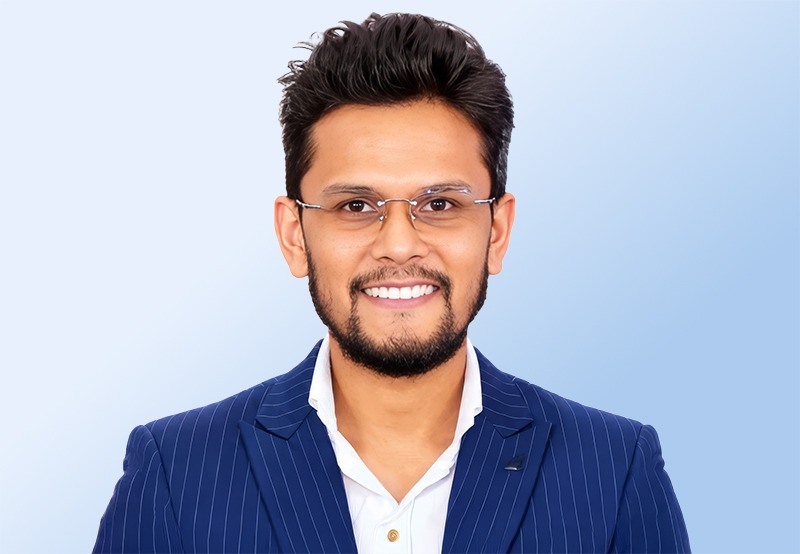
Speaking to Mercom India on the sidelines of the Renewable Energy India (REI) Expo 2026, Tushar Gupta, Business Head, Lithium Battery Division and VP Strategy at Servotech Renewable Power System, discussed the growing demand for utility-scale battery storage, the adoption of hybrid solar inverters, challenges in EV charging infrastructure, and the company’s plans to expand its manufacturing capabilities and product portfolio.
What battery energy storage solutions are you offering for utility-scale and commercial applications?
Utility-scale power projects and commercial and industrial (C&I) facilities can experience voltage fluctuations and an unstable electricity supply, which can affect operational reliability. These fluctuations create a need for high-voltage battery energy storage systems (BESS) that can respond to changing power conditions and maintain a stable supply.
We are addressing these challenges through our 241-kWh BESS, integrated with an indigenously developed 125 kW power conversion system (PCS), designed to help manage voltage fluctuations and improve power reliability in utility-scale and C&I applications. The system operates at 768 V and uses 15 battery modules connected in series.
We designed the system to address voltage fluctuations and improve power reliability. It uses air cooling and an aerosol-based fire suppression system instead of liquid cooling, reducing capital and maintenance costs.
We are also offering lithium-ion battery solutions for residential applications, including replacements for conventional lead-acid battery systems. These batteries are compatible with existing inverter installations and offer about 4,000 charge-discharge cycles, translating to an estimated lifespan of around 10 years.
Which states are you targeting for utility-scale battery storage projects?
We are working on large-scale battery energy storage projects in Odisha, Maharashtra, and Rajasthan. In Odisha, we are supplying 20 units of our 241-kWh BESS, representing a combined storage capacity of approximately 4.82 MWh.
We are not directly participating in these tenders. Instead, we supply battery storage systems and associated equipment to companies that have secured the projects.
We expect utility-scale energy storage opportunities to grow over the next two to three years, and we are expanding our production capabilities to meet demand.
How is demand evolving for hybrid solar inverters compared with conventional grid-tied inverters?
Hybrid solar inverters are gaining traction because they offer greater flexibility in managing electricity generation and consumption.
In a conventional grid-tied inverter system, solar electricity is used for consumption or exported to the grid. A hybrid inverter can additionally charge batteries and manage power flows between solar panels, batteries, consumers, and the grid.
This lets consumers use solar electricity for immediate needs, store surplus generation, and export power to the grid, depending on the system configuration.
Earlier, consumers often needed separate equipment for grid-connected solar generation and battery backup. Hybrid inverters combine these functions in a single system.
We have introduced hybrid inverters with IP54 and IP65 protection ratings for applications requiring greater resistance to dust and water exposure.
What opportunities do you see in the residential solar inverter market?
We are seeing growing residential demand for micro-inverters and hybrid solar solutions. Micro-inverters are particularly relevant for residential rooftop solar installations, and we are developing products that meet the Ministry of New and Renewable Energy’s technical guidelines.
Our portfolio includes micro-inverters starting at 1 kW, along with larger grid-tied and hybrid inverter systems. We also provide remote monitoring through our Savo Smart application. Consumers can monitor electricity generated by their solar panels, current electricity consumption, and power exported to the grid.
We are increasing production and introducing new inverter models to address the requirements of residential and commercial consumers.
How is India’s EV charging infrastructure developing, and what challenges remain?
EV charging infrastructure in India is growing rapidly. The government has introduced policies to encourage infrastructure providers and charge point operators (CPOs) to install charging stations, including through subsidies and incentives.
However, these policies need to be implemented more effectively by distribution companies (DISCOMs). Charger installation permissions are granted under government policies, but DISCOMs fail to provide a consistent and reliable electricity supply to charging stations.
Government EV charging policies offer subsidies and incentives to CPOs, but local DISCOM infrastructure and procedural alignment lag behind.
One of the biggest challenges is the reliability of electricity supply at charging stations. We may receive the necessary connection to install a charger, but that does not always guarantee a consistent electricity supply.
This creates difficulties for charging station operators and consumers. A charger may be installed and ready for use, but if electricity is unavailable, the consumer cannot charge the vehicle. Electricity connection reliability must improve alongside the expansion of charging infrastructure.
How is Servotech addressing the problem of charging station availability in the country, which is affecting the adoption of EVs?
Charging station availability is one impediment to EV growth in the country. But things are changing rapidly. The country’s growing need for charging points is driving EV adoption.
Our subsidiary, Servotech EV Infra, operates as a CPO. It has more than 300 charging stations across India.
One feature of our application is real-time charger availability information. Consumers can check whether a charging station is operational before visiting it. This helps address the uncertainty caused by unreliable electricity supply or other operational issues.
We believe these monitoring systems matter because consumers need to know whether charging infrastructure works, not just whether a charging station is installed.
What EV charging products is Servotech developing?
We manufacture EV charging solutions for different applications, ranging from smaller AC chargers to high-capacity DC fast chargers.
One of our products is a 360-kW DC fast charger with dynamic load-sharing capabilities. It can charge up to four vehicles simultaneously, distributing power based on their charging needs. The charger also supports integrated digital advertising displays, allowing CPOs to generate additional revenue from their charging infrastructure.
In addition to operating charging stations through Servotech EV Infra, we supply charging equipment to other CPOs through original equipment manufacturing and white-label arrangements.
What are your business plans for the next two to three years?
We are expanding rapidly and increasing production across our clean energy equipment portfolio.
We are introducing new products, including IP54 and IP65 hybrid inverters, and focusing on micro-inverters because demand is growing for products that comply with MNRE guidelines.
We are also working on large-scale battery energy storage projects and expanding our involvement in utility-scale applications in states such as Odisha, Maharashtra, and Rajasthan.
We will continue developing indigenous battery storage systems, solar inverters, power electronics, and EV charging equipment while expanding our manufacturing capabilities to meet demand from developers, utilities, and consumers.


Rakesh Ranjan
More articles from Rakesh Ranjan.