

US Tightens Tax Credit Rules to Curb China’s Clean Energy Role
The regulations are aimed at strengthening domestic renewable manufacturing
February 14, 2026

Follow Mercom India on WhatsApp for exclusive updates on clean energy news and insights
In a move to curb Chinese influence on the clean energy supply chain, the U.S. Department of the Treasury has issued interim guidance to enforce provisions under Section 45X of the Internal Revenue Code that restrict companies from claiming federal clean energy subsidies if they rely on foreign-made material.
The notice describes guidance on restrictions on certain energy credits under the Internal Revenue Code with respect to status as, and sourcing from, a prohibited foreign entity (PFE). These restrictions were enacted by the One Big Beautiful Bill Act (OBBA).
Last July, President Donald Trump signed an executive order directing the Secretary of the Treasury to terminate the clean electricity production and investment tax credits for wind and solar facilities and to implement the enhanced foreign entity-of-concern restrictions identified in OBBA.
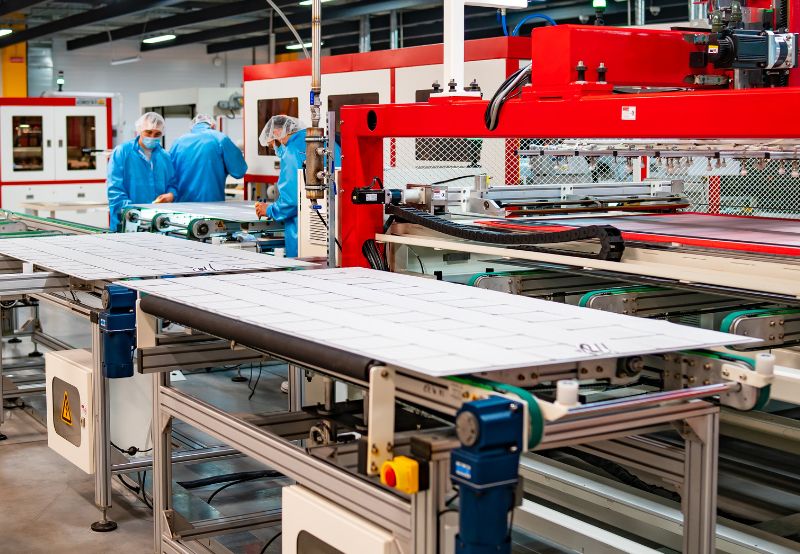
For solar manufacturing, the credit applies to components produced and sold in the U.S., including polysilicon, wafers, cells, and solar modules.
Each component qualifies for a specified per-unit credit, creating incentives across the entire solar value chain rather than only at the assembly stage.
To be eligible, the component must be produced in the U.S., and the process must involve manufacturing activity rather than just assembly.
In the energy storage segment, the regulations extend similar production credits to battery cells, battery packs, and electrode active materials. Credits are production-based and vary by component type and capacity metrics.
The rules aim to support the full domestic battery value chain.
For wind energy, the regulations cover wind turbine components, inverters, and related equipment. They clarify that only distinct, saleable components that meet statutory definitions will qualify for the credit.
The framework supports domestic production of essential balance-of-system components vital to renewable deployment.
A key feature of the regulations is the inclusion of critical minerals and upstream processing.
Credits apply to the production and sale of eligible processed materials. This strengthens upstream supply chains, ensuring that tax incentives are not limited to final assembly but extend to manufacturing activities for domestically processed minerals used in renewable technologies.
The regulations also address vertically integrated manufacturers. Companies performing substantial manufacturing in the U.S. will claim the credit. Contract manufacturers must demonstrate that they conduct qualifying production.
Credits cannot be claimed multiple times for the same component.
The aim of the framework is to create an end-to-end domestic manufacturing ecosystem for solar, storage, wind, and related technologies.
The interim regulations provide clarity and are designed to accelerate investment in U.S. clean energy manufacturing, strengthen domestic supply chains, and promote energy independence.


Rakesh Ranjan
More articles from Rakesh Ranjan.